
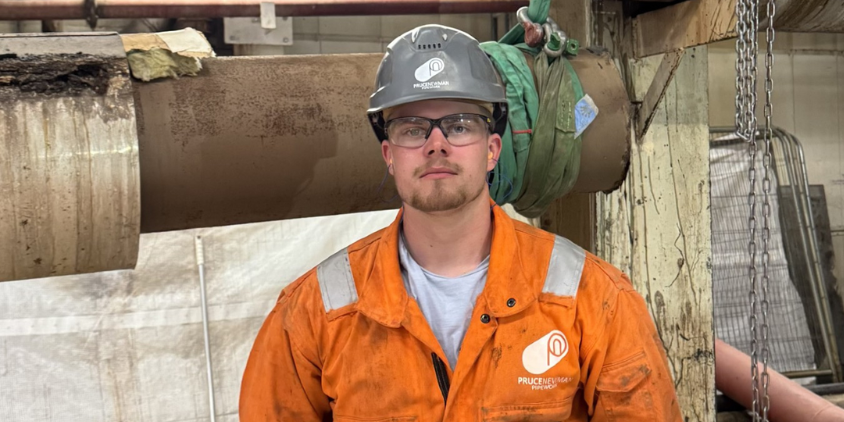
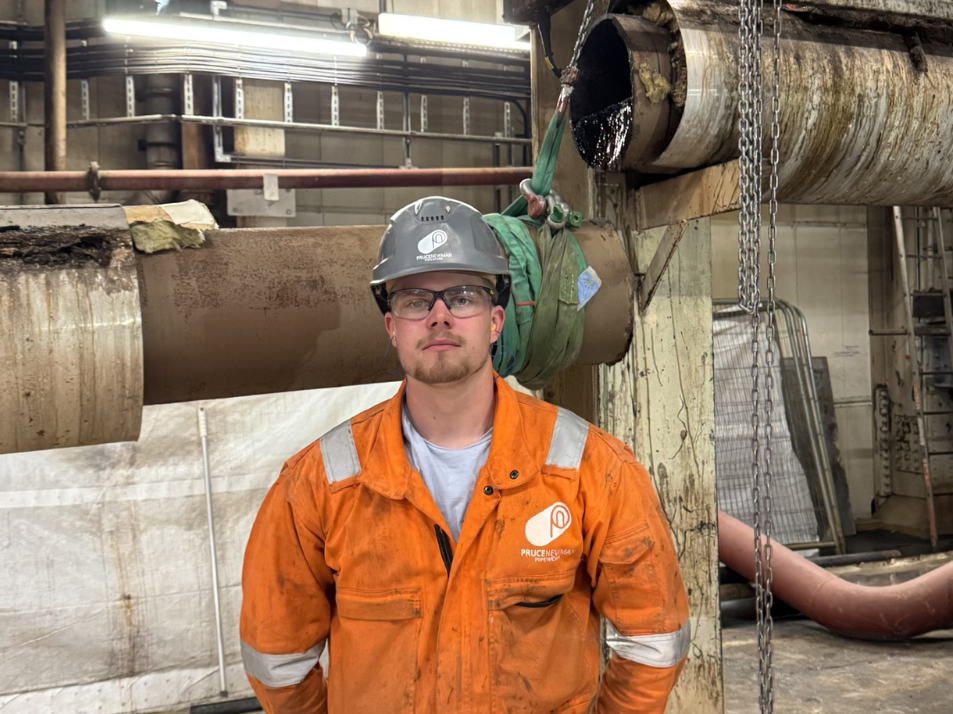
Tom Knights, who is a rigger at Pruce Newman, completed ECITB regulated qualifications at Level 2 in 2025 and then Level 3 in 2026 at the age of 24.
He is part of a small team of riggers at the Norfolk-based company, which fabricates, installs and maintains pipework and steelwork across a broad range of engineering construction sectors and industrial applications.
He says his own career journey is an example of why people should “always keep their options open” after he switched trades twice before finding the role he loves.
After leaving school, Tom worked as a bricklayer and then on highways repairing bridges before becoming a rigger in July 2024. He then went on to complete ECITB Level 2 and Level 3 diplomas in lifting and positioning engineering construction loads.
He took time out from working for Pruce Newman moving loads as a rigger to share his story.
Important role of mentoring
Tom spent his first year at Pruce Newman gaining on-site experience working alongside the company’s other riggers.
This included working across numerous different sites and sectors, such as the food and drink manufacturing industry. Engineering construction industry (ECI) workers in this sector design, build and maintain the equipment that makes the things we eat and drink.
For example, Tom has worked at British Sugar’s factory in Newark, helping put in pipes that pump around the melted sugar beet juice. Tom also worked on a fire pump in London on a fuel terminal, fitting pipework while on a boat as it was lifted across the water by a crane.
He says learning on the job like this alongside “great mentors” helped put him on a pathway to enrol on an ECITB qualification.
“I learned a lot from the two other experienced riggers at Pruce Newman, who taught me so much on different aspects of the job,” Tom said. “Having great mentors like this was a massive part in helping me learn so much about rigging in a short space of time after starting at the company. I wouldn’t know half as much if I didn’t have good people like that around me.”
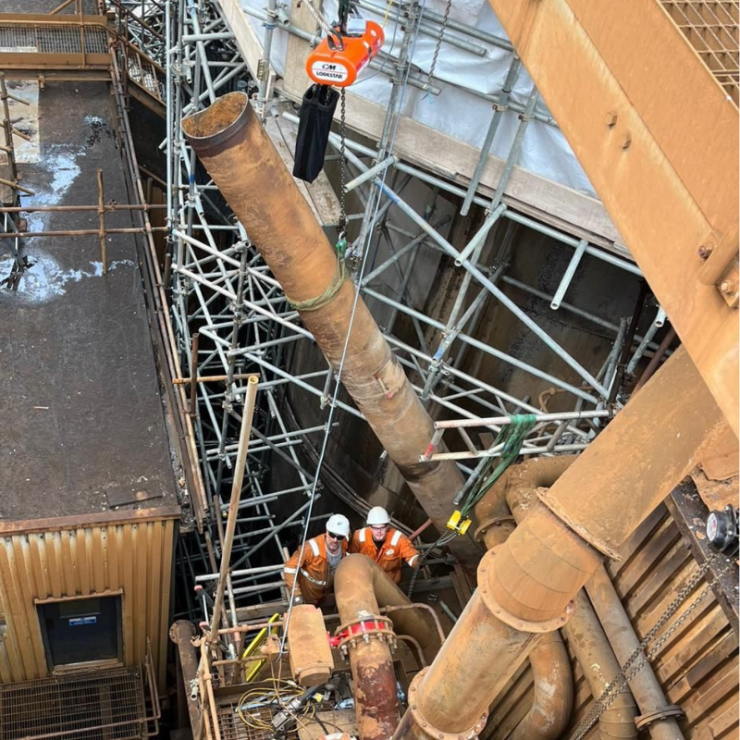
Pictured: Tom Knights, right, working with a more experienced rigger on a strip out at British Sugar.
ECITB qualifications help demonstrate capabilities
Tom would go on to be enrolled in the ECITB Level 2 Diploma in Lifting and Positioning Engineering Construction Loads on the moving loads under supervision pathway, before then moving on to complete the rigging pathway of the ECITB Level 3 Diploma in Engineering Construction Lifting, Positioning and Installing Structures, Plant and Equipment.
Based on National Occupational Standards (NOS), the diplomas include units on working safely, effectively, ethically and sustainably to manage risks and hazards.
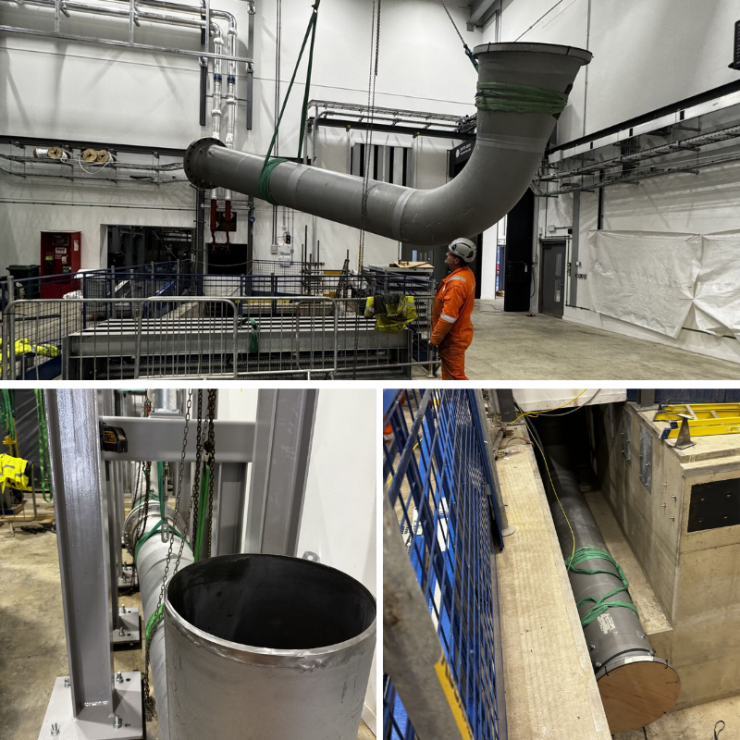
These diplomas involved Tom filling out a logbook full of evidence to prove he could do certain tasks as witnessed by other riggers. This included performing different types of lifts and techniques, such as one job where a six-metre spool needed to go under a floor to be connected to a heat exchanger. Tom took the lead on this job, using an overhead crane and trollies to roll it into place, with the other rigger checking whether it was positioned in safely and smoothly.
The Level 3 vocational qualification, in particular, provides recognition that a learner has demonstrated the required level of technical competence to be qualified to work on engineering construction structures, plant and equipment, in this case as a rigger.
“Doing the qualifications have benefited me in my role,” Tom said. “They show that I am capable of doing this job and will help open doors. Other people I work with have done a lot of qualifications which have helped them progress, so completing the Level 3 diploma will help further my career.”
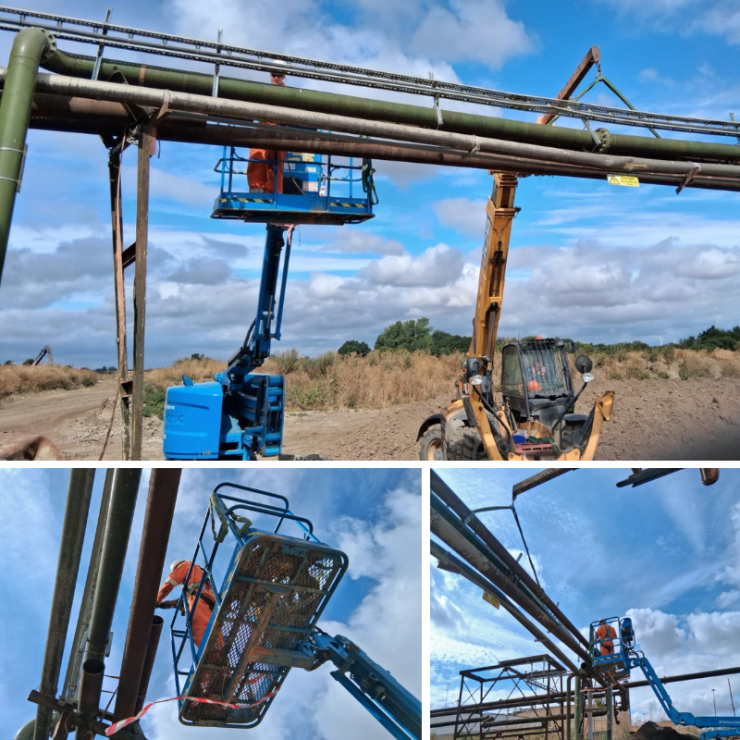
Pictured: Examples of Tom’s work, including his supervisor witnessing him lifting a big pipe into place.
Opportunities to progress
On successful completion of these ECITB qualifications, riggers like Tom can progress through additional qualifications or apprenticeships onto more senior, supervisory positions or into supporting engineering functions such as procurement, project management or project controls.
Tom says a career in rigging gives you lots of options, stating he could use his current skills to work in other ECI sectors, such as on nuclear sites or offshore on rigs.
“There are loads of opportunities being a rigger,” he said. “Riggers are very important; they help progress projects across many different sectors. Without riggers on site there wouldn’t be anyone to help put it all together in terms of planning and then lifting an object like a pipe into place.
“It’s a challenging role in terms of the size of the stuff we’re lifting and the accessibility or limited amount of headroom there can be. For example, we recently put in some six-metre-long pipes that went in under or between the different pipes and supports at this plant we were at. Another time we put a pipe in that was just two inches below another pipe that ran across it.
“It can get very tight, but there is a real sense of achievement when an object goes in successfully. I really like the variety of my job, no two days are ever the same. There are always different tasks and objects to lift, it’s never boring.”
Pictured: Tom Knights working in a cherry picker helping strip out pipework on an industry site.
Sign up for updates
Your information will be used to subscribe you to our e-newsletter.
For more information, please see our Privacy Notice.