
Choosing an apprenticeship can be a minefield of options – so how do you know which is right for you?
We caught up with five Apprentice Riggers from Altrad completing their final year assessments for their vocational qualification (VQ) ECITB Level 3 Diploma in Engineering Construction Lifting, Positioning and Installing Structures, Plant and Equipment (RQF) – Rigging.
The VQ is the core educational component of an apprenticeship. It acts as the evidence of occupational competence, gained alongside hands-on workplace experience.
Tom Garner, George Parkhurst, Luke Harper, Ben Giddings and Cole Thompson shared with us why they chose rigging, what they like about the apprenticeship and what they wished they’d known at 16.
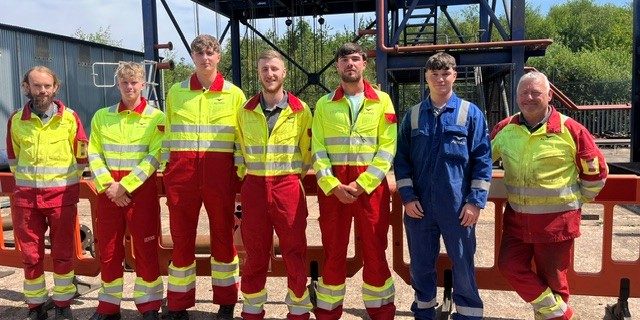
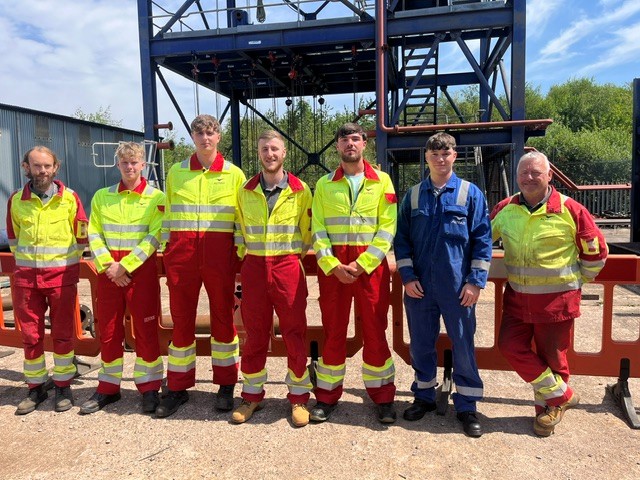
Main image (L-R): Altrad Assessor Chris Gowing, Luke Harper, Ben Giddings, George Parkhurst, Thomas Garner, Cole Thompson and Altrad Assessment Team Manager, Phil Carruthers
Why did you choose rigging?
All five apprentices knew very little about rigging and were encouraged to apply for the apprenticeship through family members.
George explained: “I was never an office-type of person. I always wanted to be hands on. After leaving school, before I joined the apprenticeship, I’d done bricklaying, carpentry, roofing, loft conversions, odd jobs. Anything I could do with my hands I was a lot more comfortable with.”
Tom said: “I didn’t actually know what rigging was but my uncle works on Hinkley Point C (HPC) and sent me the application form.”
What do you like about the rigging apprenticeship?
Tom said: Rigging is the best trade of all. I wouldn’t want to be doing anything else now. You do three months’ basic training and then you go on site. And there is something different all the time. Loads always change, sites change – it’s never the same day in and day out.”
Ben agreed: “There’s something new every day. I like the freedom and flexibility of the apprenticeship.”
George added: “I’ve been on big boilers taking out the doors, taking out turbine pipes, loads that can be as long as this room. On the new build project, we’ve been erecting steel, putting in new valves and pipelines – stuff that can go from a metre long to massive boiler tanks that weigh more than 30 tonnes. Right now, we are removing old pipelines.”
Cole said: “I work with quite a few different teams. You learn a lot from the experienced riggers. And because you continually rotate around, you come back into contact with people you’ve worked with.
“In the morning meeting you get told who your supervisor is for the day and which squad you will be working with. The Appointed Person will lead the job. Recently I’ve been putting in big 6m header pipes. They are new so you must be very careful.”
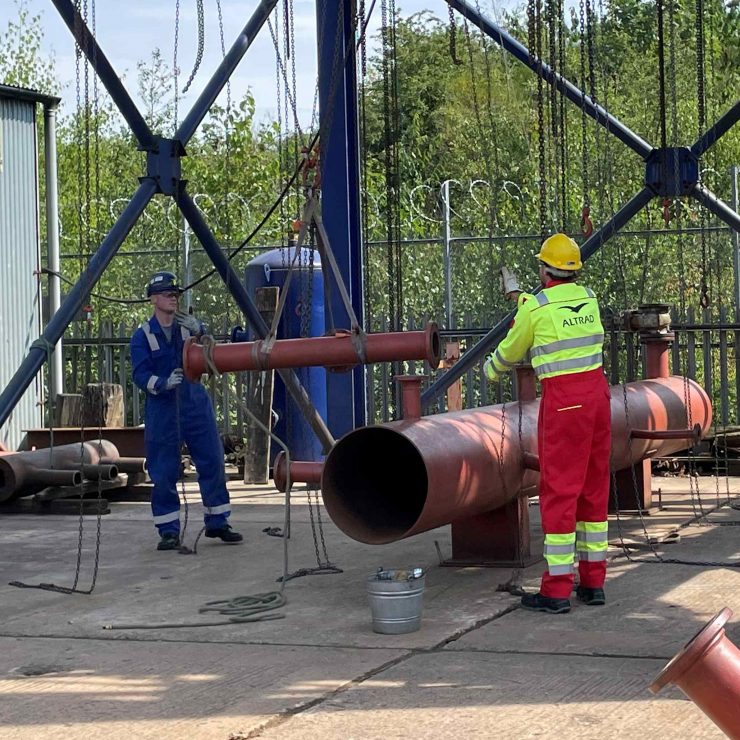
Photo (left): Apprentice riggers, Tom Garner and Cole Thompson, complete the practical assessment of lifting, rotating, positioning and installing a T-section of pipe.
What advice would you give to your younger selves?
Both Tom and George wished they’d started the apprenticeship sooner.
“I didn’t start until I was 20”, Tom told us. “If I’d have started this when I was 16, I would be qualified now and earning more money. I tell friends who have younger brothers to get on this apprenticeship scheme. It is probably one of the best. It’s a really good career path to go down. You’ll never be out of work. You work with good people as well. I like working away from my hometown – you get to see different things.”
George said: “My advice is to start this as soon as you can. Getting into this was one of my best life choices. The money is good. Everyone you work with gets on with each other. You tend to run into familiar faces too – even when you go from site to site.”
Luke agreed: “My advice is to go straight into an apprenticeship in the industry. No-one tells you when you are young how much money is in construction. For the last three years I’ve been working, earning money and living the best life I can live.”
Ben added: “I applied for the apprenticeship as soon as I could at 16. You make the best money. Getting the qualification at an early age can help you.”
George stressed how important it is to educate children on the different careers available. He said: “I went into a school where I was speaking about what the role entails and what the apprenticeships have to offer. It gives them insight that it’s not just plumbing and carpentry they can do. There are big plants out there. There are jobs all over the world.”
What's it like to work on the UK's largest construction site?
Luke, Ben and Tom have been on HPC during their whole apprenticeship. We asked what it’s like to work on the UK’s largest current infrastructure project and the first new nuclear power station built in the country in a generation.
Tom said: “It’s massive. I’ve been there three years, and I still walk around the site and see buildings and areas that I have not even worked in. It blows your mind sometimes.
“But because it is so big – every couple of months we get transferred into different squads. We get the chance to work with different people on different jobs. So, we get a good range of experience moving big bits of pipe, valves, exchanges, motors etc.”
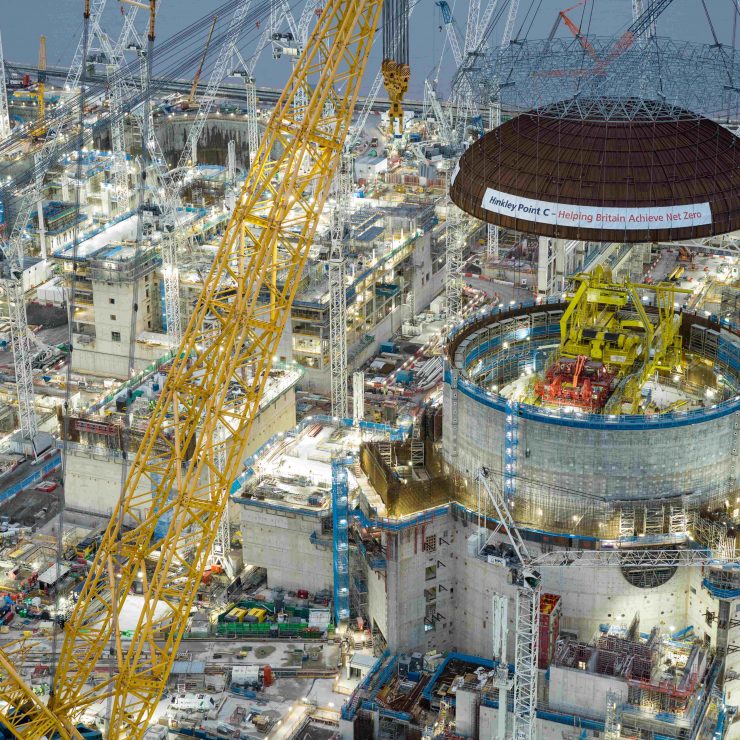
Image courtesy of EDF shows Big Carl crane placing the 245-tonne domed roof onto Hinkley Point C’s first reactor.
What would you like to do after your apprenticeship?
Luke said: “I want to stay at HPC. I’d quite like to do rope access and rigging on oil rigs or abroad. I’m small and nimble and have always liked climbing. When there are jobs on site in harnesses, I’m always the first one to be in the harness.”
“After you complete the apprenticeship, the world is your oyster,” George said. “There will be plenty of companies with plenty of work on all over the UK and abroad. It’s not just about what you know, it’s who you meet and keep in touch with who can put you on to different jobs in different areas.
“There is a big carbon capture project locally that will be kicking off next year locally that I hope to get on.”
What are your biggest achievements during the apprenticeship?
Cole said: “When you’ve finished a month-long job and it’s finally done. It’s good to know you’ve done that as part of the team. – I feel happy about that.”
George agreed: “The biggest achievement is being part of shutdowns and knowing that you were part of the team that built structures from the ground up – from having nothing there to then there being a massive steel structure. Knowing I was there from the start.”
“My biggest achievement is getting the chance to work on a big project like Hinkley,” said Tom.
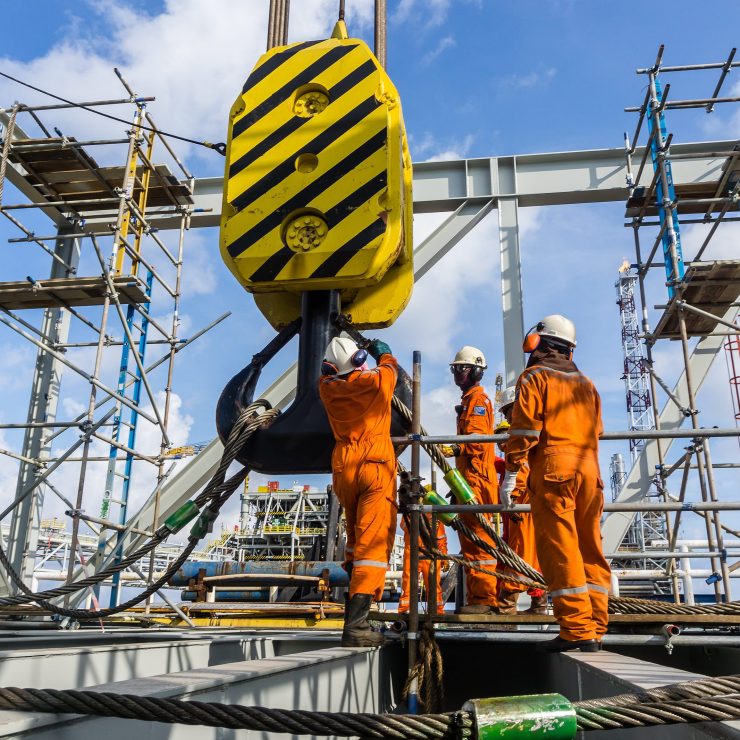
About Rigging
Riggers lift, move and position extremely large or heavy objects. This may involve cross hauling, vertical raising and lowering or suspension of loads. They often use specialist equipment such as skids and rollers as well winches, hoists and cranes of various sizes and design.
They need to be able to interpret specifications, engineering drawings and diagrams and understand the on-site hazards and health, safety and environmental requirements of plant and systems.
Sign up for updates
Your information will be used to subscribe you to our e-newsletter.
For more information, please see our Privacy Notice.