


Earn while you learn
You'll be paid for your time at college as well as the days you work
Employed from day one
Setting you on the path to financial independence
Skills for life
Earn industry-recognised qualification enhancing your employment prospects
Engineering construction apprenticeships: Real engineers with real stories
Past and present apprentices talk about their experiences of engineering construction apprenticeships and their career ambitions.
“The apprenticeship route is a no brainer. It gives you a qualification, work experience and you get paid!”
Henry Orode, Design and Draught Apprentice at FETL

Mechanical technician apprentice - Rachel Frieslick
Rachel Frieslick shares her story of retraining later in life and how an ECITB-supported apprenticeship helped her go from baker to mechanical technician.
Read Rachel's story


Fletcher Brown, Mechanical Engineering Apprentice at FieldCore, shares what his apprenticeship involves, his experience so far and advice to other prospective apprentices.
Read Fletcher's advice
Instrumentation & control engineer - Kyle Marshall
Read about Kyle’s journey into the engineering construction industry.
Meet Kyle Marshall
Electrical installation apprentice - Jamie Owen
Jamie tells us why patience is key to success.
Meet Jamie Owen
Mechanical designer apprentice - Cailey Miller
Cailey explains that effort is key to unlocking opportunity.
Meet Cailey Miller
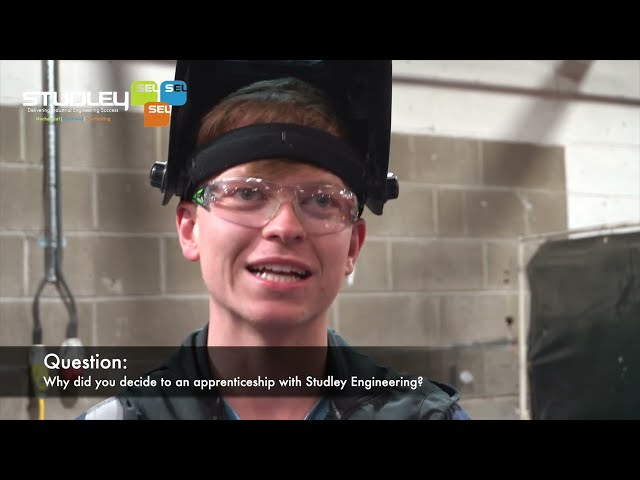
Welding apprentice - Jack Beaty

Electrical technician - Dan Taylor
Dan Taylor has found that good things come to those who wait
Meet Dan Taylor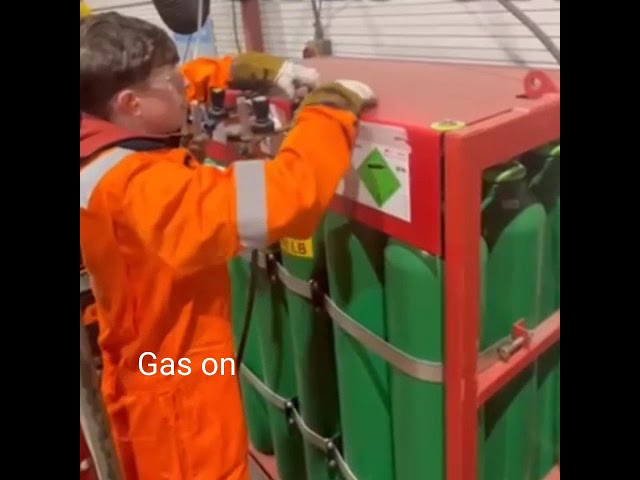





What engineering apprenticeships are available? Here are a just few
Full profile details
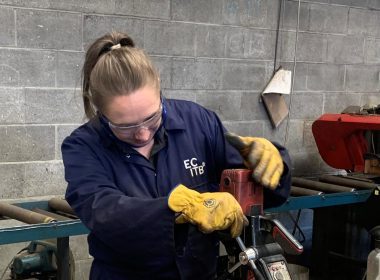
Mechanical Fitter
A Mechanical Fitter within the engineering construction industry is responsible for the assembly, installation, maintenance and testing of complex machinery and mechanisms.
Some of the key equipment you will use and encounter as a Mechanical Fitter include engines, pumps, transmission systems, power transmission systems, turbines, hydraulic and pneumatic actuators and systems.
Being a Mechanical Fitter requires a high degree of skill and craft to meet the specifications within design drawings.
Mechanical Fitters work across engineering construction sites, fabrication areas, repair and maintenance sites, petro-chemical installations, mining facilities and offshore platforms.

Welder
Welders in the engineering construction industry are responsible for the joining together of metal, or sometimes thermoplastic, components and assemblies in either pipe or plate form.
Welders are required to read and interpret welding specifications to establish the correct process to be used, select the correct material and welding equipment and the required preparation of the material for welding.
The welding process may be performed manually or may be performed by specialist equipment.
Each welding operation carries a varying level of complexity which demands a great deal of skill, focus and attention to detail.
Welders can progress in their careers to become supervisors, overseeing large teams working on hugely important infrastructure projects.

Instrument & Control Technician
Instrument & Control Technicians are responsible for the installation, dismantling, maintenance and repair of instrumentation systems and system components.
These systems can be electronic, electro-mechanical or pneumatic technology which may be used to indicate, record and control a wide variety of equipment, plant and machinery.
Instrument and Control Technician have the ability to locate and identify faults quickly and restore plant and equipment to working condition.

Pipefitter
Pipefitters are responsible for the positioning, assembly, fabrication, maintenance and repairs of piping systems.
Engineering construction industry piping systems may carry water, steam, chemicals or fuel which may be used in cooling, heating, lubricating and other processes.
Pipefitters are also responsible for determining which method of jointing is required within the piping system and must ensure the integrity of joints that are made.
In the offshore industry the pipefitter is often required to have additional training to operate in this unique environment.

APTUS - shaping energy technicians of the future
Every journey has a first step
Finding information about engineering apprenticeships and how you can apply for them can be confusing. We've listed some useful resources to help you take that all important next step.




Are you an employer looking for more information about engineering apprenticeships?
Engineering apprenticeships provide a mixture of off-the-job learning and on-the-job practical work experience. This gives you the assurance that apprentices are receiving the skills and knowledge that your business needs. Demand for skilled workers is set to increase over the coming years. Engineering construction apprenticeships are a critical way of developing new talent.
Apprenticeship supportApprenticeship FAQs
Does the ECITB employ apprentices or offer apprenticeships directly?
The ECITB does not employ apprentices or recruit on behalf of employers in the industry.
Engineering construction apprentices are employed by an engineering construction company from the beginning of their apprenticeship. The employer, sometimes working with a college or training provider, manages the recruitment and application process.
The ECITB supports apprenticeship training across the engineering construction industry and may provide grant support to eligible employers.
To explore available routes:
- Visit the ECITB apprenticeships page.
- Visit the Skills England apprentice search page.
- Search the Government’s apprenticeship vacancy service.
- Contact engineering construction employers in your area.
- Contact local colleges and engineering training providers, as some recruit apprentices on behalf of employers.
How do I apply for an engineering construction apprenticeship?
Applications must normally be made directly to the recruiting employer or the training organisation managing recruitment for that employer.
The ECITB does not recruit apprentices on behalf of the engineering construction industry in Great Britain.
We recommend that you:
- Search the Government apprenticeship vacancy service.
- Check the careers pages of engineering construction employers.
- Contact relevant colleges and training providers in your region.
- Prepare an up-to-date CV and evidence of your qualifications.
Recruitment arrangements and entry requirements vary between employers. Applications for some September intakes may open many months in advance, so candidates should check regularly and apply as early as possible.
Where can I find welding, pipefitting, rigging, mechanical, electrical or instrumentation apprenticeships?
The availability of individual apprenticeship disciplines depends on employer demand, location and the training provision available in each region.
The ECITB does not maintain a permanent list of live vacancies for every occupation. Candidates should:
- Search current apprenticeship vacancy services.
- Check the careers pages of employers working in engineering construction.
- Contact colleges and engineering training providers who provide the apprenticeships (these can be found on the Skills England apprentice search webiste).
Common engineering construction career areas include welding, pipefitting, mechanical fitting and maintenance, rigging, electrical installation, instrumentation and control, design and drafting, project controls and related technical disciplines.
Please note that not every occupation or programme is available in every region.
What qualifications or grades do I need for an apprenticeship?
Entry requirements are set by the employer and apprenticeship provider and will vary depending on the occupation and apprenticeship level.
Employers may consider:
- English and mathematics qualifications.
- Relevant science, engineering or technical subjects.
- Practical aptitude.
- Communication and teamwork.
- Reliability and willingness to learn.
- Ability to travel to the workplace and training location.
Some employers may ask applicants to complete aptitude tests, interviews, practical assessments or medical and fitness assessments.
Candidates should check the vacancy information carefully or contact the employer or training provider responsible for recruitment.
How does an apprenticeship work?
An apprentice is employed and paid while completing a structured programme of workplace learning, off-the-job training and assessment.
Training arrangements vary. An apprentice may attend a college or training centre through:
- Day release.
- Block release.
- Extended periods of initial off-the-job training.
- A combination of workplace and training-provider delivery.
The programme will normally include an occupational qualification or apprenticeship standard and practical evidence gathered in the workplace.
The employer and training provider can confirm the precise delivery model for an individual apprenticeship.
Can a parent apply for an apprenticeship on behalf of their child?
Parents and carers can help a young person research opportunities, prepare applications and understand the available routes. However, the prospective apprentice will normally need to submit their own application and participate directly in the recruitment process.
Young people should be encouraged to:
- Create their own CV.
- Register for apprenticeship vacancy alerts.
- Attend careers events and employer open days.
- Contact colleges and training providers.
- Apply directly for suitable vacancies.
Applications should not be delayed until the end of a college or Scholarship programme, as some employer recruitment windows close several months before the proposed start date.
What should I do if my apprenticeship employment ends before I complete my qualification?
Contact your training provider immediately.
The available options will depend on:
- The apprenticeship rules applying in your nation.
- How much of the programme has been completed.
- The qualification or standard being followed.
- Whether another employer can be found.
- The time limits associated with funding or assessment.
- Whether any completed units or evidence can be retained.
The ECITB may be able to help where the apprentice was employed by an ECITB in-scope company or was completing an ECITB-supported programme. However, the ECITB cannot guarantee alternative employment or continued funding.
When contacting the ECITB or training provider, include:
- Apprentice name and contact information.
- Employer name.
- Training provider.
- Apprenticeship title and discipline.
- Start date.
- Expected completion date.
- Qualifications or units completed.
- Date employment ended.
- Any deadlines already provided.
Can I pay privately to complete an unfinished apprenticeship?
An apprenticeship cannot normally be completed simply by paying privately, because occupational competence must usually be demonstrated through appropriate workplace activity and assessment.
There may be alternative options, such as:
- Completing an outstanding qualification outside the apprenticeship.
- Transferring to another employer.
- Recognition of previously completed units or evidence.
- Completing technical training separately.
- Returning to an apprenticeship at a later date.
The training provider and awarding organisation must review the individual’s evidence and advise what can be retained or completed.
Who should answer questions about my college course and progression to an apprenticeship?
Questions about the content of a college programme, qualification registration, progression arrangements or whether a future employer will enrol a learner on an additional qualification should normally be directed to the college or training provider.
They will be able to confirm:
- The qualification currently being undertaken.
- What it does and does not include.
- Progression routes.
- Whether workplace assessment is required.
- Whether further qualifications would form part of a future apprenticeship.
A future employer will determine which apprenticeship and qualifications are appropriate for the role being offered.
Related pages



Sign up for updates
Your information will be used to subscribe you to our e-newsletter.
For more information, please see our Privacy Notice.