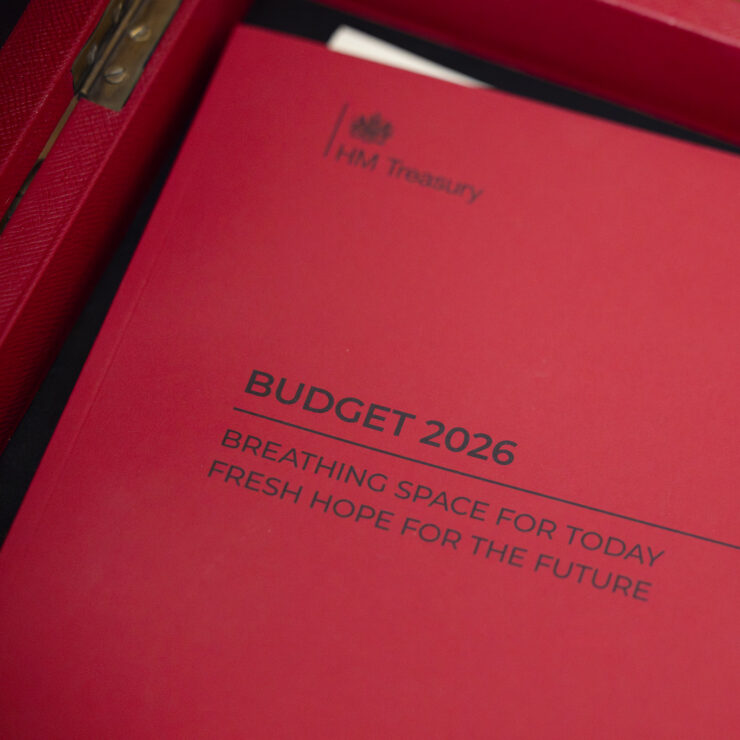
Stimulating local growth, regional investment, energy security and place-based skills, all of which will impact the engineering construction industry, featured prominently in today’s Autumn budget.
Photos: Courtesy of HM Treasury
Additional funding for MSAs in the Autumn budget
The Chancellor announced £100 million additional funding for Mayoral Strategic Authorities (MSAs) to deliver local apprenticeship services in England, expanding the scheme from seven to all 14 areas with directly elected mayors.
The, now £240 million, initiative is designed to bridge the gap between local employers (specifically small and medium sized enterprises) and young people aged 16 to 24.
The first wave of MSAs, expected to begin delivery in early 2027, are:
- Greater London Authority
- Greater Manchester Combined Authority
- Liverpool City Region Combined Authority
- South Yorkshire Mayoral Combined Authority
- Tees Valley Combined Authority
- West Midlands Combined Authority
- West of England Mayoral Combined Authority
There was also more information on the devolution of funding through MSAs. This is great news for regions to be able to tailor skills interventions to the workforce and skills needed in their local areas.
The ECITB is already in dialogue with MSAs where the engineering construction industry (ECI) forms an important part of the local economy.
This will help to ensure those businesses benefit fully from the devolved skills funding offer and have the competent workers they need where and when they need them.
Supporting young people into education, work or training
Ahead of the publication of the Milburn Report next month, this budget aims to strengthen pathways into work through the Jobs Guarantee for eligible 18-24 year olds.
This complements the wider Youth Guarantee designed to support young people who are currently claiming Universal Credit into education, work or training, ensuring that every young person is either “earning or learning”.
Early next year, the government will publish a White Paper in response to the publication of Alan Milburn’s final report.
The ECITB is exploring how its new entrant programmes, such as the ECITB Work Ready programmes, can dovetail into the new measures to support young people.
It is exploring opportunities to coinvest resources and expertise to improve outcomes for more young people and maximise the future talent pipeline for ECI businesses.

“We await the detail of the proposals in the Autumn Statement and stand ready to support the government to flesh out how these could be implemented across the ECI to the greatest benefit of our employers.
“Approval of the Jackdaw gas field last week has been welcomed by the oil and gas industry in Scotland. The announcement by the Energy Secretary Miatta Fahnbulleh last Wednesday emphasised Jackdaw gas production will support winter energy security and minimise reliance on imported higher-emission fuels during the transition to renewables and nuclear.
“The new Energy Wealth Fund announced in the budget will use tax revenues from North Sea oil and gas to invest in renewable and low carbon energy projects and support the energy transition. This provides added assurance for businesses investing in jobs and skills within clean energy and low carbon infrastructure as these workforces scale up.
“Of course, the workforce needed to deliver our energy future and support the transition will need to be flexible. A versatile engineering construction workforce with easily transferable skills will be key to supporting the industries that contribute to reindustrialisation across the UK, against the backdrop of an evolving energy mix.
“The ECITB is enabling greater mobility of the oil and gas workforce through standardised competence assurance programme, Connected Competence.
“Also, earlier this year the ECITB launched its Wind Turbine Maintenance Technician Cross Skill Programme. This fully funded programme, in partnership with Scottish Government, equips skilled Electrical, Mechanical and Instrument & Control Technicians from the oil and gas industry to step confidently into the fast-growing wind operations and maintenance sector.”
Andrew Hockey
CEO of the ECITB
Recruitment for Wind Turbine Maintenance Technician Cross Skill Programme
Forth Valley College and Relyon have started recruitment of a cohort for the Cross Skill Programme to start in the Grangemouth area before Christmas.
A further cohort will start with ASET in Aberdeen in the New Year.
Read more on the Wind Turbine Maintenance Technician Cross Skill Programme